
Why a fall of more than 15% in gold prices worries India’s gold lenders
In India, a family that needs cash can borrow against a gold bracelet and keep the right to get it back when the loan is repaid. If gold gets cheaper, the bracelet loses value while the debt stays the same. Mayank Sharma, head of gold loans at IIFL Finance, told BusinessLine that lenders could manage a further 5% to 10% fall from current prices. A drop of more than 15%, he warned, could cause panic in the gold-loan market.
What happens to the bracelet?
Suppose a family borrows 75,000 rupees against gold worth 100,000 rupees. If gold falls 15%, the bracelet is worth 85,000 rupees. The family still owes 75,000. The gap between the value of the gold and the debt has shrunk from 25,000 rupees to 10,000. This example leaves out interest and repayments.
Depending on the loan agreement, the lender may ask the family to repay part of the loan or pledge more gold. For someone who borrowed because cash was already tight, the difficulty is finding money sooner than expected.
Are more borrowers falling behind?
India’s outstanding gold-loan balance grew 60.6% in the year to September 2026, according to credit bureau CRIF High Mark. The number of active loans rose 14% over the same period. The amount owed grew much faster than the number of loans.
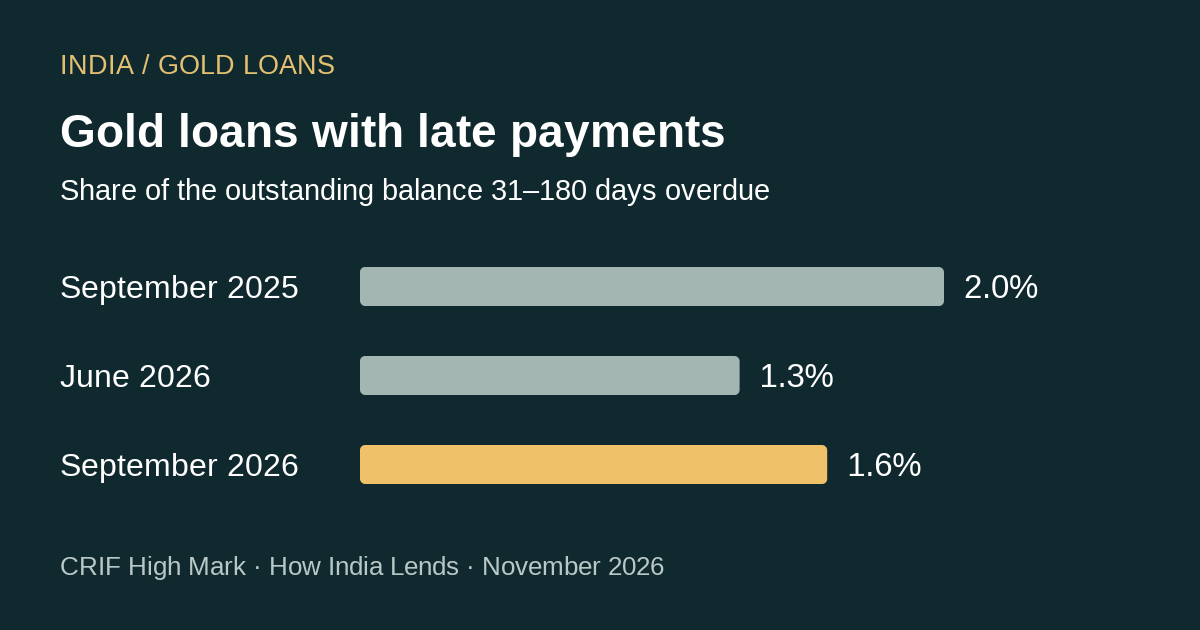
Loans with payments between 31 and 180 days late accounted for 1.6% of the outstanding balance in September, up from 1.3% in June. A year earlier, the share was 2.0%. Repayment delays have picked up since June but remain less widespread than last September.
What lenders are watching
K. R. Bijimon, chief operating officer of Muthoot Finance, said borrowers could need another two quarters to adjust to new repayment arrangements. Sharma’s 15% warning describes the pressure a further fall could put on families that have pledged their gold. He gave no forecast that gold would fall that far.
BusinessLine / TradingView · 19 November 2026 · CRIF High Mark · How India Lends, p. 13